

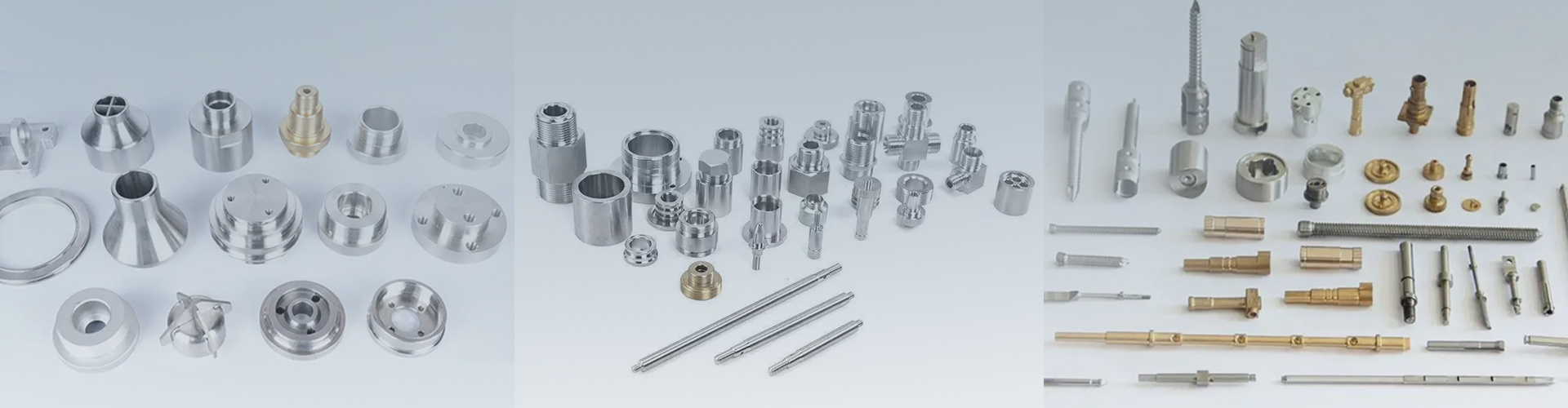
Advanced Precision Parts Manufacturing for High-Performance Industrial Applications
Published Time:
2025-12-02
Precision parts manufacturing is a critical foundation of modern engineering, enabling the production of components that meet extremely tight tolerances, high dimensional accuracy, and exceptional performance standards. These parts are essential for industries such as aerospace, automotive, robotics, electronics, medical devices, energy systems, and advanced machinery. Through the integration of sophisticated machining technologies, digitalized production control, and rigorous quality assurance, precision parts manufacturing ensures components function reliably under demanding conditions and contribute to the efficiency and innovation of complex systems.
At the heart of precision parts manufacturing is CNC technology, including CNC turning, milling, multi-axis machining, EDM (electrical discharge machining), laser machining, and micro-machining processes. These techniques allow manufacturers to achieve consistent and repeatable results even when producing components with intricate geometries, fine features, and narrow tolerances measured in micrometers. The high degree of automation reduces human error while increasing production speed and stability, making it possible to achieve large-scale manufacturing without sacrificing accuracy.
Material selection is a key element that determines the performance, durability, and application suitability of precision parts. Common materials include aluminum alloys, stainless steel, titanium, hardened steel, copper alloys, engineering plastics, ceramics, and advanced composite materials. Each material offers unique properties such as corrosion resistance, high strength-to-weight ratios, thermal stability, electrical insulation, and biocompatibility. Matching the right material with the right manufacturing method ensures optimal performance in environments involving high stress, temperature fluctuations, or continuous mechanical load.
One of the defining characteristics of precision parts manufacturing is the importance of surface quality. Many applications—such as medical implants, aerospace components, sealing structures, and high-speed equipment—require ultra-smooth surfaces to reduce friction, minimize wear, and ensure long-term reliability. Surface treatments like anodizing, electroplating, passivation, polishing, heat treatment, sandblasting, powder coating, and laser finishing improve both functionality and durability. In electronic and optical applications, surface precision can be directly linked to performance stability and safety.
Quality control and inspection form the backbone of the manufacturing process. High-precision measuring devices—including coordinate measuring machines (CMM), optical comparators, surface profilometers, laser scanners, and automated inspection systems—are used to validate every critical dimension. Manufacturers often implement ISO-certified quality management systems to ensure traceability, consistency, and compliance with global standards such as ISO 9001, ISO 13485, AS9100, or automotive-grade quality requirements.
Precision parts manufacturing also plays an essential role in enabling technological innovation. As industries evolve toward automation, electrification, miniaturization, and smart manufacturing, the need for more refined, complex, and reliable components continues to grow. In robotics, precision machined parts support high-speed motion and accurate positioning. In medical technology, they ensure device safety and compatibility with human tissue. In aerospace and automotive systems, they contribute to lighter structures, reduced fuel consumption, and improved mechanical performance.
Another significant advantage is the flexibility and scalability offered by modern manufacturing technologies. Rapid prototyping, small-batch custom production, and high-volume manufacturing can all be performed with consistent quality. CAD/CAM software streamlines the transition from design to production, allowing quick design changes and faster development cycles. Custom tooling, automated production lines, and integrated digital monitoring help reduce lead times and enhance efficiency.
Precision parts are also engineered for long-term reliability, capable of withstanding harsh operational conditions such as vibration, heat, corrosive environments, and continuous mechanical stress. This makes them indispensable in fields requiring high dependability, like industrial automation, renewable energy, defense technology, and telecommunications.
In conclusion, precision parts manufacturing is a vital discipline that supports the structural, functional, and technological needs of modern industries. With its ability to generate highly accurate, durable, and customizable components, it continues to drive advancements in engineering, automation, and product innovation. As manufacturing technologies progress, including AI-assisted machining, digital twins, and ultra-fine microfabrication, precision parts manufacturing will remain at the forefront of industrial development, supplying the high-performance components that power the world’s most advanced systems.
NewsCenter
 2026-10-10


Beijing Pafinal Precision Machinery Co., Ltd.
Email:sales@pafinal.com

Address: No. 239 Huanhe South Road, Tianjin Pilot Free Trade Zone (Airport Economic Zone), Tianjin
sales@pafinal.com:
Whatsapp:
在线客服添加返回顶部
图片alt标题设置: PAFINAL
表单验证提示文本: Content cannot be empty!
循环体没有内容时: Sorry,no matching items were found.
CSS / JS 文件放置地