

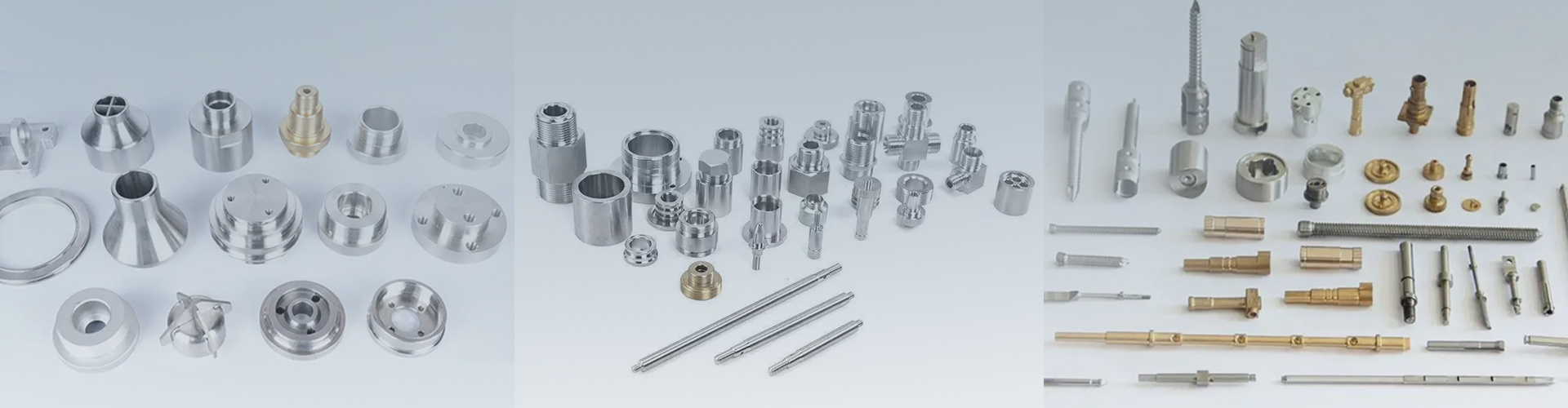
Understanding Machined Parts: Essential Insights for the Manufacturing Industry
Published Time:
2025-11-06
Machined parts are a cornerstone of the manufacturing industry, particularly within sectors focusing on mechanical hardware and component fabrication. These components are produced through various machining processes, which involve removing material from a solid workpiece to achieve the desired shape, dimensions, and surface finish.
The machining process can include techniques such as turning, milling, drilling, and grinding, each of which has specific applications depending on the requirements of the part being produced. Turning is commonly used for cylindrical shapes, where the material is rotated against a cutting tool. Milling, on the other hand, is ideal for creating complex geometries and flat surfaces. Drilling focuses on creating holes, while grinding is typically used for achieving fine tolerances and surface finishes.
Materials used for machined parts are diverse and can include metals such as steel, aluminum, and titanium, as well as plastics and composites. The choice of material often depends on the required properties of the final product, including strength, weight, corrosion resistance, and machinability. For example, aluminum is favored for its lightweight and excellent corrosion resistance, making it suitable for automotive and aerospace applications. In contrast, steel is often chosen for its strength and durability, ideal for heavy-duty machinery.
One of the main advantages of machined parts is the high level of precision they can achieve. Advanced CNC (Computer Numerical Control) machines allow for the production of components with tolerances as tight as a few micrometers. This precision is critical in industries where performance and reliability are paramount, such as aerospace, automotive, and medical devices.
Furthermore, the versatility of machined parts means they can be tailored to meet specific design requirements. Custom machining services enable manufacturers to create parts that fit unique specifications, which can lead to improved performance and efficiency in the final product.
In addition to precision and customization, the machining process also allows for scalability in production. Manufacturers can produce small batches for prototyping or large volumes for mass production, adapting their processes to meet market demands.
In conclusion, machined parts play a vital role in the manufacturing landscape, providing essential components for a myriad of applications. Understanding the machining processes, material selection, and the benefits they offer is crucial for industry professionals aiming to excel in the field. By leveraging the capabilities of modern machining technologies, manufacturers can enhance product quality, performance, and innovation.
NewsCenter
 2026-10-10


Beijing Pafinal Precision Machinery Co., Ltd.
Email:sales@pafinal.com

Address: No. 239 Huanhe South Road, Tianjin Pilot Free Trade Zone (Airport Economic Zone), Tianjin
中企跨境-全域组件
制作前进入CSS配置样式
sales@pafinal.com:
Whatsapp:
在线客服添加返回顶部
图片alt标题设置: PAFINAL
表单验证提示文本: Content cannot be empty!
循环体没有内容时: Sorry,no matching items were found.
CSS / JS 文件放置地